
Fields in Ada County Property Tax Records
Two offices hold different halves of the property tax trail. The Assessor handles value and exemptions. The Treasurer handles billing and collection. Always check the year attached to each figure, because a current assessment, a prior bill, and a delinquent balance can point to different periods at once.
| Field | What It Shows | Where |
|---|---|---|
| Total assessed value | Annual parcel value estimate | Assessor roll |
| Taxable value | Value after applicable relief | Assessment and calculation |
| Exemptions | Qualified reduction on the roll | Assessor |
| Tax-code area | Combined taxing-district geography | Parcel record and bill |
| Bill and status | Charge, payments, or delinquency | Treasurer |
Idaho requires assessment at market value, but the tax due also reflects exemptions, district budgets, and levy rates. A recorded sale price is a different fact entirely.
The Ada Assessor Values; the Treasurer Bills
The Ada County Assessor search supplies parcel identity, value, exemptions, property year, and tax-code area. The Ada County Treasurer collects taxes for the taxing districts. The Treasurer site is the official entry point for payment information.
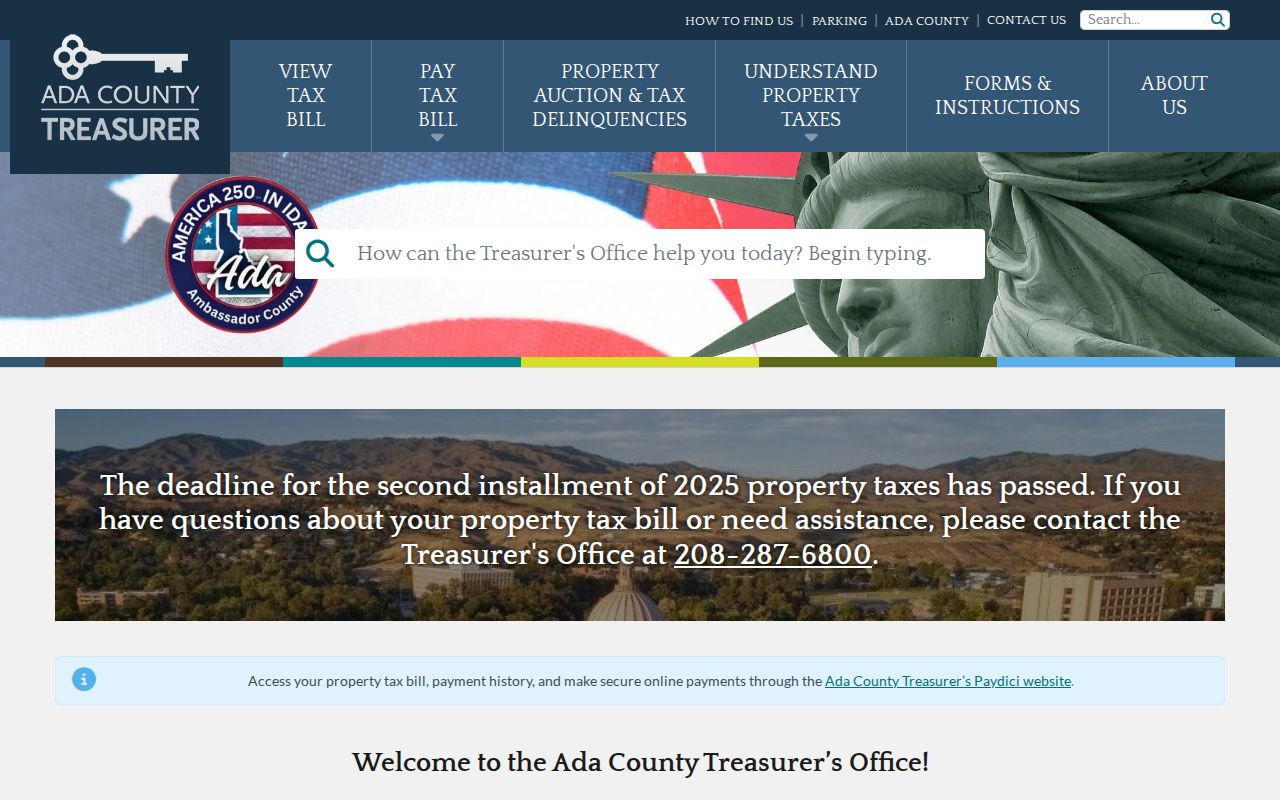
Use the Treasurer site for tax questions. Return to the Assessor when the issue is value or relief rather than payment.
Ada County Assesses at Market Value
Idaho calls for assessment at 100 percent of market value. The Assessor analyzes the market each year. Parcels also get physical reinspection for at least 20 percent of the county annually. This happens on a five-year cycle. That does not put an appraiser on every parcel every year. The Idaho State Tax Commission explanation shows how value, relief, and budgets connect.
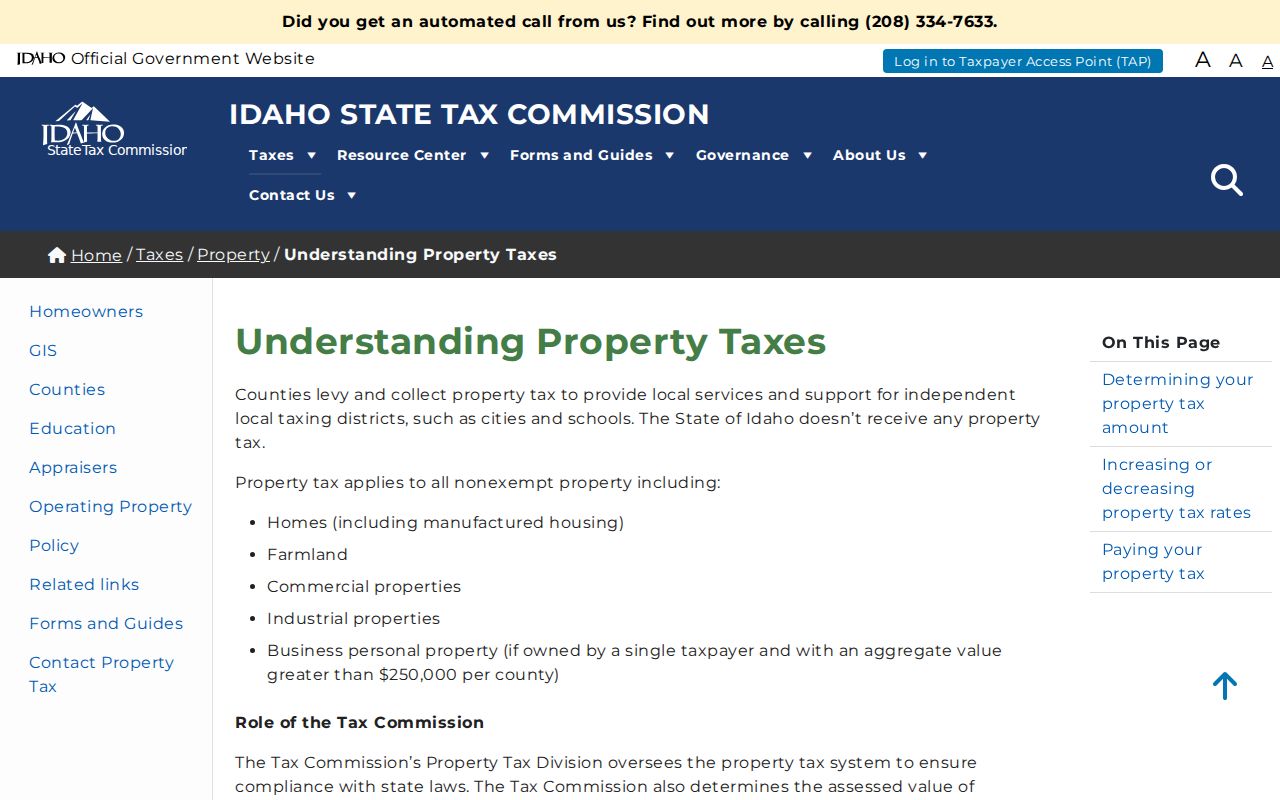
That state source helps you read Ada figures without mistaking a tax value for a guaranteed sale price.
How Ada's Homeowner Exemption Changes Taxable Value
Idaho's homeowner exemption can remove half the value of an eligible owner-occupied home and up to one acre, capped at $125,000, from taxable value. It shrinks the taxable base. The assessment itself still stands. Other relief programs carry their own rules, so apply through the Assessor with current instructions rather than guessing eligibility from a parcel label or a name.
Look Up an Ada County Tax Bill
The current-year calculator uses amounts as of midnight on the prior day and covers only the current year. For older balances, submit a written or phone request.
- Find the address in the Assessor and save its parcel number and year.
- Match the parcel in the Treasurer's current-year calculator.
- Request prior years through the tax-information form or (208) 287-6800.
- Compare exemptions and tax-code area against the roll.
- Ask the Treasurer about any delinquency or tax-deed stage.
- Assessed value
- The Assessor's annual market-value estimate.
- Taxable value
- Value after applicable exemptions.
- Levy
- A rate tied to district budget needs and taxable value.
- Tax lien
- A statutory claim for unpaid property tax.
Read Ada County Delinquency Components Separately
Delinquent taxes accrue interest at 1 percent per month from January 1, per county guidance. An inspected tax-deed publication lists the parcel, owner, mailing address, legal description, tax years, fee, late charge, interest, and total due. An excess-proceeds claim treats the owner of record differently from a recorded party in interest. The latter must prove a recorded lien.
Verify every demand. Ada County warned in 2022 about a fake tax-processing notice using public tax data, a seal, and a lien threat.
Ada Veteran Relief Has Its Own Filing Window
The veterans property-tax-reduction page sets a January 1 through April 15 application window and requires the current homeowner exemption plus qualifying evidence.
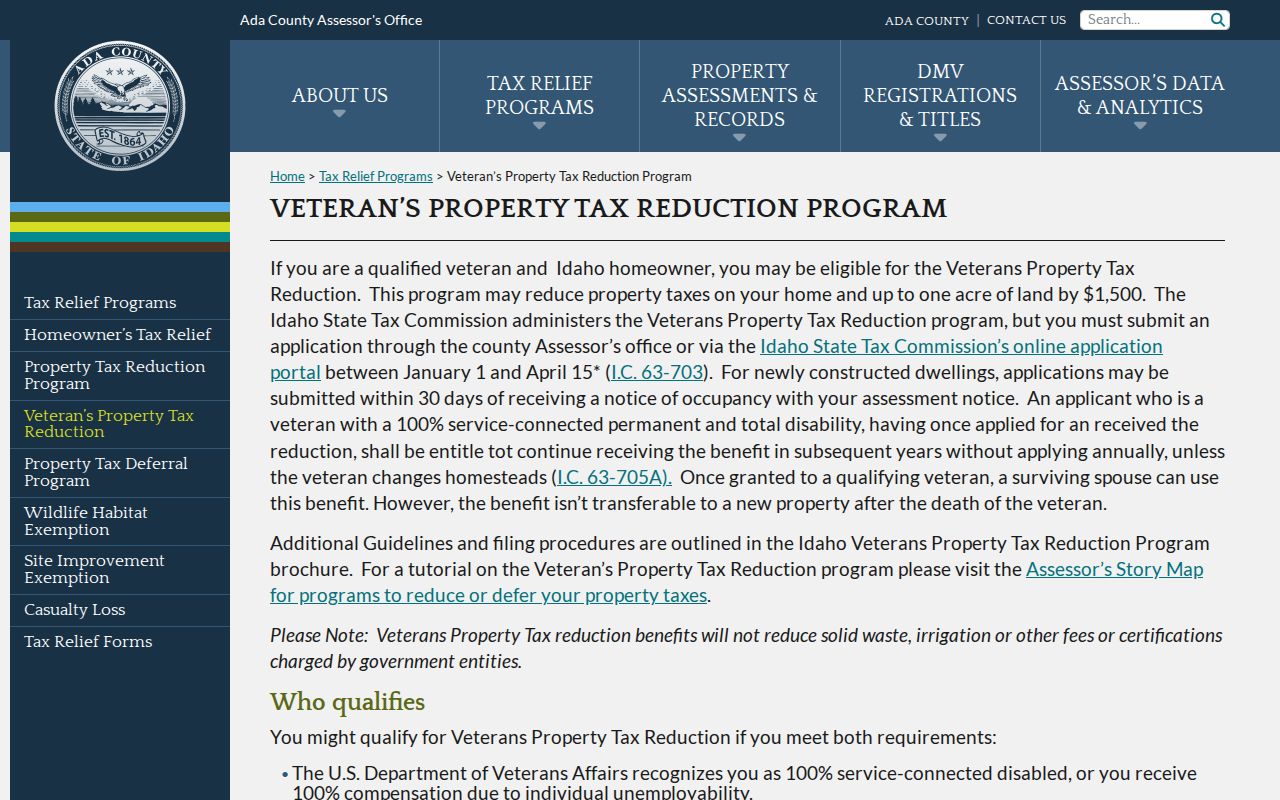
That program page controls current eligibility and documents, and prior approval never substitutes for a timely application.
Read Ada's Tax-Code Area, Not Just the Total
A tax-code area groups the taxing jurisdictions that touch one parcel. City limits, school districts, and other boundaries can yield a different levy mix. School districts sometimes overlap city limits, so neighboring land may owe different rates. Use the GIS map and the tax roll for district context. Then check the Treasurer bill for the actual charge. A ZIP code or mailing city decides nothing here.
Contest an Ada County Assessment on Time
Assessment notices go out by the first Monday in June. Start with the Assessor, bringing parcel facts and comparable market evidence. If nothing gets resolved, appeal through the County Clerk to the Ada County Board of Equalization by the fourth Monday in June.
Short appeal window. File with the Ada County Board of Equalization by the fourth Monday in June, confirming the current year's date.
A value appeal in Ada County lives and dies by the calendar. The June assessment notice opens the window for review, and a tax bill arriving later does nothing to extend it. Hold onto the notice, the parcel number, photos, and any comparable evidence from the start. For help reading the figures, see Ada County property value. Treat the assessment calendar and the collection calendar as two separate tracks, because they are.
Bills generally go out in the fall. Idaho guidance treats December 20 and June 20 as the usual half-payment dates unless the Treasurer requires earlier payment. A weekend or a parcel-specific event can shift practical timing. Confirm the current calendar with Ada County before relying on it.
Evidence should match the parcel as it stood on the assessment date. Look closely at land and improvement characteristics, acreage, zoning context, and the subdivision. Even a small error in the brief property description matters. Comparable sales help when they are genuinely similar and tied to the proper market period. A recent purchase price is relevant, but it does not automatically settle the statutory market-value estimate for every question.
Clerical errors deserve a different route than value disputes. Point the problem out to the Assessor first. The parcel number, property year, notice, and the exact field in question make a cleaner review trail. Keep copies of everything submitted, and note the dates. The Board of Equalization runs on deadlines. An informal chat never substitutes for an appeal filed through the required channel.
Tax relief has its own evidence and its own dates. The homeowner exemption hinges on an eligible primary residence, while the veteran reduction follows the county's separate application rules. Relief can change taxable value or lighten the tax burden. It never changes the recorded deed or erases the assessed-value history. Questions about an exemption shown or missing on the roll go to the Assessor, not the Treasurer.
Older bills call for a focused request to the Treasurer. Include the parcel number, the situs address, and the owner name as shown for that year. Also list the precise tax years needed. The current calculator is not an archival ledger. If a balance mixes tax, fees, late charges, and interest, ask for the itemized record. That way each amount can be checked on its own.
Ada County tax records also attract scammers. The county's 2022 warning described a fake "Ada County Tax Processing Unit" demand that used a seal and threatened a lien. Public parcel data can be copied into convincing solicitations. Verify the parcel and amount through the official Treasurer contact before paying anything. An accurate tax fact on a mailed claim proves nothing about the sender.
When a delinquency reaches tax-deed publication, read the whole file. The legal description and tax years matter as much as the owner and mailing fields. A mailing address shows where notices go, not where a person lives. Parties claiming excess proceeds may need a recorded security instrument and identification. An owner label alone cannot settle every claim tied to a tax deed.
The Idaho Public Records Act offers a fallback for open tax material that routine service does not expose. Send the request to the custodian who actually holds the record. Identify the parcel, the tax years, and the specific ledger, notice, or payment item wanted. Broad requests invite retrieval and review work. A clear request also keeps an Assessor value record from getting tangled with a Treasurer collection record.
Tax data serves lawful property research well. Checking a purchase, preparing an appeal, settling an estate, or verifying a delinquency notice all fit. Idaho Code §74-120 restricts distribution or sale of mailing and telephone lists. A public tax-mailing address is not proof that anyone occupies the parcel. It must never be used to stalk, harass, or harm anyone.